Black Art and the Burden of Representation Filetype Pdf
The Burden of Representation
Essays on Photographies and Histories
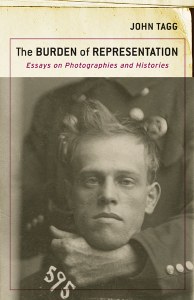
A powerhouse in photographic theory—updated and with a new essay
Tagg examines the history of the apply of photographs as documentary images, in courtrooms, hospitals, and law work, on passports, permits, and licenses. Rejecting the idea of photography as a record of reality, Tagg traces a previously unexamined history that includes the meaning, status, and effects of photographs.
A probing, compassionate, and lucid account of the institutionalization of the photographic process and its social and political consequences.
Photographs are used as documents, evidence, and records every day in courtrooms, hospitals, and police work, on passports, permits, and licenses. Merely how did such usages come up to be established and accepted, and when? What kinds of photographs were seen as purely instrumental and able to function in this way? What sorts of agencies and institutions had the power to give them this status? And more than generally, what conception of photographic representation did this involve, and what were its consequences?
Drawing on semiotics, on debates in cultural theory, and on the piece of work of Foucault and Althusser, John Tagg rejects the idea of photography as a record of reality and the notion of a documentary tradition, and traces a previously unexamined history that has profound implications non only for the history and theory of photography but also for understanding the office new ways and modes of representation were to play in processes of modernistic social regulation. In response, these essays argue for a rigorous historical and institutional analysis of the meaning, status, and effects of photographs, rooted in a historical grasp of the growth and dispersal of the mod state.
A probing, compassionate and lucid account of the institutionalization of the photographic process and its social and political consequences. Tagg's is a fresh voice which rejuvenates art historical practices and politics.
—
Albert Boime, Professor of Art History, UCLA
John Tagg represents a new voice in American photograph criticism. What distinguishes him from the prevailing, parochial discourse is his familiarity with the ideas of leading figures in the Marxist and Poststructuralist argue in Europe. The rapidly growing, though still simply incipient field of study of photographic history has much to gain from applying these ideas.
—
Ulrich Keller, Professor of Art History, UC Santa Barbara
Tagg's work has contributed to a reshaping of the parameters of cultural politics that has influenced a whole generation of critics. . . . Ane tin can recognize in these pages the emergence of a distinctive theory of photography'southward relationship to power. Information technology is this theory that is perhaps The Burden of Representation'south almost challenging and provocative legacy for present and future historians of photograpy.
This volume is an exemplary piece of counter-hegemonic history writing; in Foucauldian fashion, Tagg conceptualizes photographs every bit ever already part of a discursive system. . . . Provides a framework of theoretical and methodological self-awareness and a thorough interrogation of the problem of realism.
—
Media, Culture, and Gild
An important and impressive collection of essays. The common themes and arguments within them, forth with his advisedly considered introduction, provide a new knowledge of photography and of its varied institutional histories.
A probing, empathetic, and lucid account of the institutionalization of the photographic process and its social and political consequences.
An of import and impressive collection of essays.
An exemplary slice of counterhegemonic history writing.
—
Media, Civilisation, and Society
Contents
The Burden of Recollection: Thinking Photography after Foucault
Acknowledgments
Introduction
1. A Democracy of the Prototype: Photographic Portraiture and Article Production
2. Evidence, Truth and Society: Photographic Records and the Growth of the State
three. A Means of Surveillance: The Photograph as Evidence in Police
four. A Legal Reality: The Photograph as Property in Law
v. God's Sanitary Law: Slum Clearance and Photography in Late Nineteenth-Century Leeds
half dozen. The Currency of the Photograph: New Deal Reformism and Documentary Rhetoric
7. Contacts/Worksheets: Notes on Photography, History and Representation
Notes and References
Bibliography
Index
Source: https://www.upress.umn.edu/book-division/books/the-burden-of-representation
Publicar un comentario for "Black Art and the Burden of Representation Filetype Pdf"